
Can China be a world leader in green alternatives?
Thursday, 3 December 2009.
Vincent Kolo, chinaworker.info
[This article is from the new issue of the Chinese socialist magazine Shehui Zhuyi Zhe – a special issue on climate change to coincide with the Copenhagen Climate summit, where an estimated 30,000 demonstrators are expected]
We see a glimpse of the possibilities to stem climate change in the development of China’s solar and wind industries today, which have grown rapidly. But these developments are being held back and distorted by the demands of global and Chinese capitalism, causing investment bubbles, overcapacity (unbelievably) and extreme imbalances. Thus, while China is now the number one manufacturer of solar-cells and wind turbines, the vast majority of this production is exported, mostly to advanced capitalist countries enabling them to improve their carbon profile, while they shift many of their high-polluting industries to poor countries with lax regulation, especially China.
The central government’s target is to generate 15 percent of China’s energy capacity from wind, solar and other renewable sources by 2020. Today, renewable energy accounts for less than 1 percent. But while investment in renewable energy has expanded rapidly – wind power capacity has doubled in each of the last four years – the sector’s full potential is not being realised and indeed under the present mode of production some of this investment is counter-productive from a climate perspective. Polysilicon, the key component of solar panels, and wind power equipment were among six industries (the others were steel, cement, flat glass, coal and chemicals) on a recent central government list of industries with serious overcapacity, issued to pressure banks to limit their loans to these sectors. There is little evidence that the central government’s pressure has succeeded in curbing overinvestment. “Bubbles exist throughout the new-energy sector,” noted the South China Morning Post (10 September). This prompted the National Development and Reform Commission, the top planning body, to call for “higher entry barriers” to prevent rogue companies and local governments rushing into the sector.
China’s solar power industry has expanded at breakneck pace. It is now the world’s biggest producer of polysilicon. In 2004 the industry was negligible, but reached 4,000 tonnes of polysilicon in 2007, rising to 30,000 tonnes this year and a target of 150,000 tonnes in 2011. Last year alone, 33 new polysilicon plants started production across China. “But far from saving the world, the production of solar panels is aggravating pollution and adding to energy consumption,” revealed Stephen Chen in the South China Morning Post (10 September). This is the reality of a production system, wracked by waste and a chaotic lack of planning, that is skewed towards the global capitalist market (98 percent of China’s solar cell production is exported).
Chen’s article pointed out that for each 10kg of polysilicon produced – enough to make solar panel with a capacity of 1 kilowatt – Chinese factories are burning two tonnes of coal. A one kilowatt panel is enough to keep a fridge cool for one day, while that amount of coal is enough to keep the same fridge running for 20 years! Minister of Science and Technology, Dr Wan Gang, admitted China is burning a lot of coal to produce solar panels, most of which are exported to the West. “Developed countries get clean air and reputation of a carbon-free economy, while pollution and greenhouse gas emissions are chalked up to our account,” he said. Furthermore, too rapid expansion (in relation to current demand which is under-stimulated) has led to huge price falls. A kilogram of polysilicon which sold for US$350 last year has slumped to US$70 this year, leaving some Chinese factories unable to pay their electricity bills!
Silicon plants are also a major health hazard. Despite being such a young industry there has been a spate of local struggles, some involving violent clashes with police, against the construction of such factories. Dr Dang Qingde, a pollution expert from Sichuan, explained that “A shiny polysilicon plant is like a shiny bomb. It may look clean and innocent, but you don’t want to have one in your neighbourhood.” Dang listed more than ten poisonous substances from chlorine to trichlorosaline (which attacks the lungs) found at a typical polysilicon plant.
The rapid expansion of wind power in China, potentially a huge boon to the fight against climate change, is likewise being hamstrung by lack of coordination and planning, and insufficient “smart technology” alongside manic overinvestment in more accessible low-tech sectors. Freed of such constraints, wind power alone could enable China to cut is emissions (total emissions, not carbon intensity) by 30 percent in the next two decades, according to a report in the US journal Science. This one example highlights the fundamental weaknesses of the Chinese economy: quantity triumphs over quality and cheap labour triumphs over technology. Entrepreneurs previously involved in toy-making and other crisis branches have this year ploughed cash into wind and solar power for speculative reasons, being duly rewarded with soaring stock prices as hedge funds and other financiers go crazy for anything linking the word “China” to the word “green”.
There are now over 100 turbine makers around China engaged in the low-tech production of towers and turbines – many of poor quality. But there are only a handful of Chinese companies producing transmission gears and other technology-intensive components for the turbines. This mismatch, born of a lack of planning, has led to extreme distortions in the market. Overproduction of turbines has depressed prices. Struggling turbine makers are passing on this price pressure to their suppliers in the hi-tech components sector, threatening the survival of some of these companies. Hu Yueming, chairman of the China High Speed Transmission Equipment Group, predicts a major shake-out in the industry, warning that perhaps only one in ten turbine makers will survive.
A lack of mostly imported “smart technology” is also holding back the potential for wind power in China. Wind power fluctuates depending on weather conditions, making it expensive to connect wind farms to national electricity grids. China lacks a comprehensive national power grid, partly due to cost, and partly for political reasons: provinces jealously guard their ‘own’ electricity. Thus, while China now has 12.2 gigawatts of installed wind capacity, only a quarter of this – 3 gigawatts – is actually used. To overcome this, China’s power grid and power storage facilities need an expensive technological upgrade. Siemens, the German multinational, is one company hoping to benefit from this process with a vast and lucrative market for its “smart grid” technology that allows grids to cope with the fluctuating power inputs from wind farms. But who will pay for this? Questions of this type are central to the talks in Copenhagen – where a gigantic blame game will be played out between capitalist governments.
Beijing, supported by the Indian and other developing country governments, will insist that advanced capitalist countries finance at least part of the bill. There is talk of US$100 billion annually from rich countries towards ‘mitigation’ i.e. support for poor countries to switch to low-carbon economic models. But the capitalist class in donor countries will in this case insist on binding emission cuts as a means to exert control and derive greater benefits from this process. Such ‘support’ will be used to further prize open national markets in the developing world to multinationals from the advanced capitalist countries. Socialists oppose this approach. We call instead for state ownership under democratic control of multinationals in energy, technology, manufacturing, banking and construction, and for a common global approach based on the principle of solidarity to overcome the technological and financial problems associated with climate change. On this basis, the niche technologies of companies like Siemens would be shared out on a non-profit basis to enable China and other developing countries not only to catch up but to complete the crucial transition to renewable energy.
The one area where the US government is pushing for technical cooperation with China is in relation to ‘carbon capture and sequestration’, a largely untested process whereby instead of being released into the atmosphere carbon emissions are compressed and stored in rock formations deep underground. This is a highly questionable process, and in the case of US-China cooperation is clearly intended to fit China out as a carbon dumping ground for other countries, a prospect welcomed by many in China’s government and business world. This is also an area where China’s dictatorial system and massive repressive apparatus are seen as a big advantage by foreign capitalists and governments that are dogged by protest groups and forced to face periodic elections. It is no accident that oil companies favour carbon capture as it creates an incentive for further reliance on fossil fuels. It is also expensive in cash terms. The IPCC estimates that carbon capture and compression would increase consumption of fuel at a coal-fired power plant by 25 to 40 percent. But there are major safety concerns too. International experts, including operators of test storage sites, warn the process can result in gas leaks and underground movement. Given the appalling environmental safety record of companies, regulators, and local governments across China, this is not a comforting thought.
The climate crisis means the world can no longer afford a system of competing, national and profit-oriented, research programmes under the control of unaccountable corporations. There is an urgent need for collective global brainstorming to develop the necessary technologies to facilitate the transition to renewable energy. This will only be possible on the basis of massive government financing under democratic control, with the ‘market’ and the speculators expelled from the process. Under capitalism, profits are protected through intellectual property laws that confer a monopoly position upon big corporations and elite interests. The world is effectively held to ransom by a corporate ‘technological mafia’ as we have seen clearly in the case of the global drugs industry and its resistance to socially necessary programmes to combat HIV and other killer diseases in poor countries.
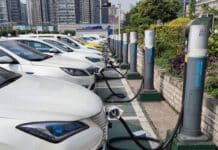
This also explains the faltering steps taken so far to develop electric vehicle engines (which by themselves will not mark an advance as long as most electricity is derived from fossil fuels). The historic crisis in the motor industry has quickened the development tempo recently, but internal combustion engines still account for 99 percent of all vehicles sold. The major motor companies each have their own electric prototypes, but none have yet committed to mass production. Billions of dollars have been wasted on separate and rival research and design programmes, whereas with a combined or ‘open source’ approach to technological problems the development stage could undoubtedly have been fast-fowarded at a fraction of the costs. Not only is capitalism destroying the planet, it is also obstructing the search for solutions. Two stark choices are therefore posed by the climate crisis and the Copenhagen meeting: Socialism or climate devastation!
Post comment
You must be logged in to post comments